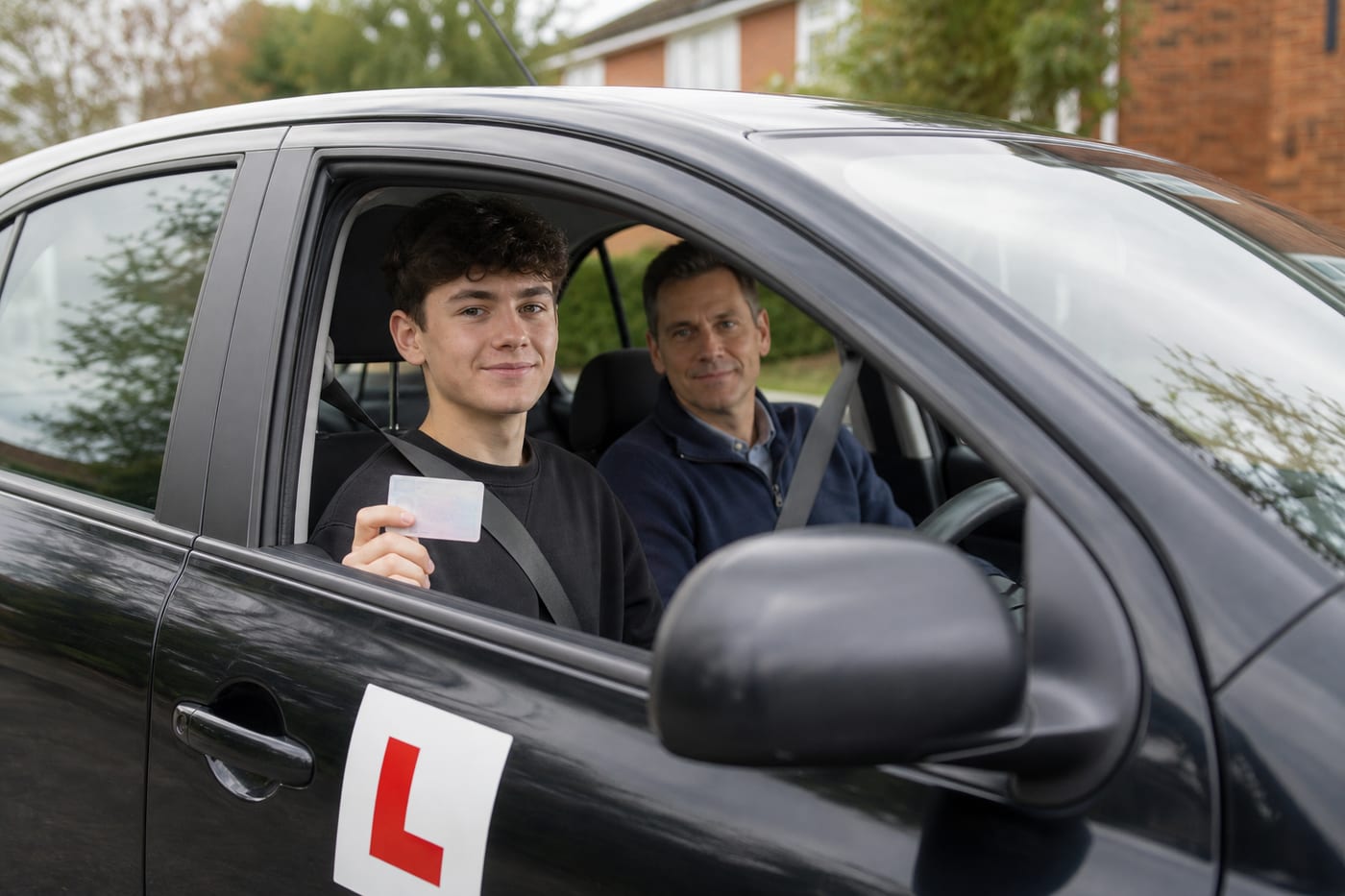
Getting your first provisional driving licence is an important step towards learning to drive in the UK. You normally need one before you can take driving lessons on public roads, practise with a suitable supervising driver or book your theory test.
The application itself is usually straightforward, but delays and mistakes can occur if you use the wrong service, provide incomplete information or fail to disclose a relevant medical condition. This guide explains who can apply, what you will need and what you can do once your licence arrives.
What is a provisional driving licence?
A provisional driving licence gives you permission to learn to drive certain categories of vehicle, subject to specific conditions. It is not the same as a full driving licence and does not allow you to drive a car independently.
When learning in a car, you must usually:
- Be supervised by someone who meets the legal requirements
- Be properly insured to drive the vehicle
- Display L plates in England, Scotland and Wales, or L plates or D plates where applicable in Northern Ireland
- Follow the conditions and vehicle categories shown on your licence
- Meet the minimum eyesight standard for driving
Your provisional licence also acts as your driving licence identification when you book and attend your theory and practical tests.
When can you apply for your first provisional licence?
In Great Britain, you can normally apply for your first provisional driving licence when you are 15 years and 9 months old. However, this does not usually mean you can begin driving a car immediately.
Most people can start driving a car on public roads at 17. Different minimum ages can apply to mopeds, motorcycles and some people receiving the higher or enhanced rate mobility component of a qualifying disability benefit.
Always check the category entitlements and dates shown on your licence before driving. If you are preparing to learn as soon as you turn 17, applying in advance can help you avoid an unnecessary wait. Our guide to driving at 17 in the UK explains the wider rules on supervision, insurance, lessons and tests.
The application process is different in Northern Ireland, where licences are issued by the Driver & Vehicle Agency rather than the Driver and Vehicle Licensing Agency. Use the official nidirect service if you live in Northern Ireland.
Check that you meet the basic requirements
Before applying, make sure you satisfy the relevant eligibility rules. For a first provisional car licence in Great Britain, these generally include being old enough to apply, meeting the minimum eyesight requirement and having permission to live in Great Britain for the required period.
You must be able to read a modern vehicle number plate from 20 metres away, with glasses or contact lenses if you need them. Your eyesight will be checked at the start of your practical driving test, but you are responsible for ensuring it is good enough whenever you drive.
You must also provide accurate information about your identity, address and health. Giving incorrect details can delay your application and may have legal consequences.
What do you need to apply?
The exact information requested can depend on how you apply and which identity documents you have. It is sensible to gather everything before beginning.
You may need:
- A valid UK passport or another accepted identity document
- The addresses where you have lived during the previous three years
- Your National Insurance number, if you know it
- A suitable photograph, unless the service can use your UK passport photo
- A method of paying the application fee
- Details of relevant medical conditions
If you apply by post, you may need someone to sign your photograph and verify your identity. This depends on the documents you submit and your circumstances. Follow the instructions on the application form rather than asking just anyone to sign it.
Accepted evidence and application fees can change, so confirm the current requirements on GOV.UK or nidirect before sending documents or making a payment.
How to apply online through the official service
For most applicants in Great Britain, applying online through GOV.UK is the simplest option. Make sure the web address belongs to the official government website before entering personal or payment information.
1. Open the official application service
Search GOV.UK for “apply for your first provisional driving licence”. Avoid unofficial websites that charge an additional administration fee for passing your information to the DVLA.
An intermediary cannot make the DVLA issue your licence more quickly simply because it charges you more.
2. Enter your personal details
Provide your name, date of birth and address exactly as requested. Check spelling carefully, particularly if your name contains several parts or differs between documents.
You will normally be asked for your address history. Do not guess dates if you can check them first.
3. Confirm your identity
If you have a valid UK passport, the DVLA may be able to use the passport details and photograph for your licence. If this is not possible, you may be asked to provide other evidence or complete additional steps.
Only send original documents if the official instructions require them. Keep a record of what you send and consider secure postage for valuable identity documents.
4. Make the payment
Pay the fee displayed by the official service. Check the total before confirming the transaction and keep your application reference or confirmation email.
5. Complete any follow-up action
An online application does not always mean the entire process will be digital. The DVLA may ask you to return an identity form, photograph or supporting document. Deal with requests promptly and use the address supplied in the official instructions.
How to apply by post
If you cannot use the online service, you can apply by post using form D1, which is available from participating Post Office branches in Great Britain. Read the accompanying notes carefully before filling it in.
Complete the form clearly, provide the required photograph and identity evidence, and include the correct payment method. Check that you have signed every required section before posting it.
Postal applications generally involve more paperwork, particularly when identity documents need to be returned. Take a photograph or copy of the completed form for your records, but do not send photocopies where original documents are specifically required.
Northern Ireland applicants must follow the separate DVA process explained on nidirect. A Great Britain D1 form should not be treated as the correct application route for Northern Ireland.
Medical conditions and your application
The application asks questions about health because some medical conditions can affect safe driving. You must disclose a condition if the licensing authority requires you to report it, even if you feel well or believe it is controlled.
A reportable condition does not automatically prevent you from receiving a licence. The DVLA or DVA may request more information, contact a healthcare professional, place restrictions on a licence or require an assessment before making a decision.
Do not leave out information to speed up the application. Review our guide to medical conditions that must be reported to the DVLA, and use the official medical condition checker if you are uncertain.
Common application mistakes to avoid
A careful final check can prevent many avoidable problems. Common mistakes include:
- Applying through an unofficial website and paying unnecessary fees
- Using a nickname rather than the name supported by identity documents
- Entering an incomplete three-year address history
- Sending an unsuitable photograph
- Forgetting to sign a postal form
- Providing the wrong payment or fee
- Failing to respond to a request for further evidence
- Not declaring a medical condition that must be reported
Do not book lessons on the assumption that your licence will arrive by a particular date. Processing can take longer if identity checks or medical investigations are needed.
What to check when your provisional licence arrives
Check the photocard as soon as you receive it. Make sure your name, photograph and date of birth are correct. You should also examine the vehicle categories, entitlement dates and any restriction codes.
Your address does not appear on the front of a current photocard in the same way as the other personal details, but the licensing authority must still hold your correct address. Report errors or changes through the appropriate official service.
Keep the licence secure and do not share photographs of it on social media. A driving licence contains personal information that could be useful to fraudsters.
What can you do after receiving it?
Once your provisional entitlement is valid, you can begin learning within the rules. You can take lessons with an approved driving instructor or practise with a suitable accompanying driver.
For private practice in a car, the supervising person must be at least 21 and must have held a full licence for the type of vehicle being driven for at least three years. The learner must have appropriate insurance, and the car must be roadworthy, taxed and covered by a valid MOT where one is required.
Display correctly sized L plates where they can be clearly seen from the front and rear. In Wales, learners may use D plates, L plates or both. You must not drive alone, even for a short journey.
Once you have your provisional licence details, you can also arrange the theory test. Use our step-by-step guide to booking your theory test to choose a test centre and avoid unofficial booking services.
Keeping your licence details up to date
Your responsibilities continue after the photocard arrives. Tell the DVLA or DVA if you change your name or address, and report any medical condition when required.
Pay attention to the photocard expiry date. Your driving entitlement and the photocard itself are related but distinct, so do not assume that an expired card is acceptable simply because you have not passed your practical test yet.
If your licence is lost, stolen, damaged or destroyed, apply for a replacement through the official service. Do not continue making bookings without checking which licence information or identification you will need.
Frequently asked questions
Can I have driving lessons before my provisional licence arrives?
You should not drive a car on a public road until your provisional entitlement is valid. Wait until the licence has been issued and check its start date and categories. You can still study the Highway Code and prepare for lessons while waiting.
Can I apply for a provisional licence without a UK passport?
Yes, it may be possible to apply using another accepted identity document. The process can involve additional evidence or a person confirming your identity. Check the current official list because accepted documents and instructions may change.
Do I need a provisional licence to book the theory test?
Yes. You need a valid provisional driving licence and its details to book the relevant theory test. The licence is also the key identification document you will normally need at the test centre.
Does a provisional licence let me drive alone?
No. A car learner must be accompanied by a qualifying supervisor and properly insured, unless driving with an approved instructor under the applicable rules. Driving alone as a provisional licence holder is illegal and may invalidate insurance.
Conclusion
Obtaining your first provisional licence is the formal starting point of learning to drive. Apply through GOV.UK in Great Britain or nidirect in Northern Ireland, prepare the correct identity information and answer all medical questions honestly.
When the licence arrives, check every detail before arranging lessons or private practice. A provisional licence gives you the opportunity to learn, but you must continue to follow the rules on supervision, insurance, L plates and vehicle safety until you qualify for a full licence.