A holiday road trip can be one of the most enjoyable ways to travel, but a long drive needs more preparation than an everyday journey. Heavy traffic, unfamiliar roads, changing weather and a fully loaded car can all increase the demands on the driver.
Whether you are heading to the coast, visiting family or driving to a campsite, good planning can make the journey safer and less stressful. The following holiday road trip safety tips will help you prepare your vehicle, protect your passengers and make better decisions behind the wheel.
Plan the journey before setting off
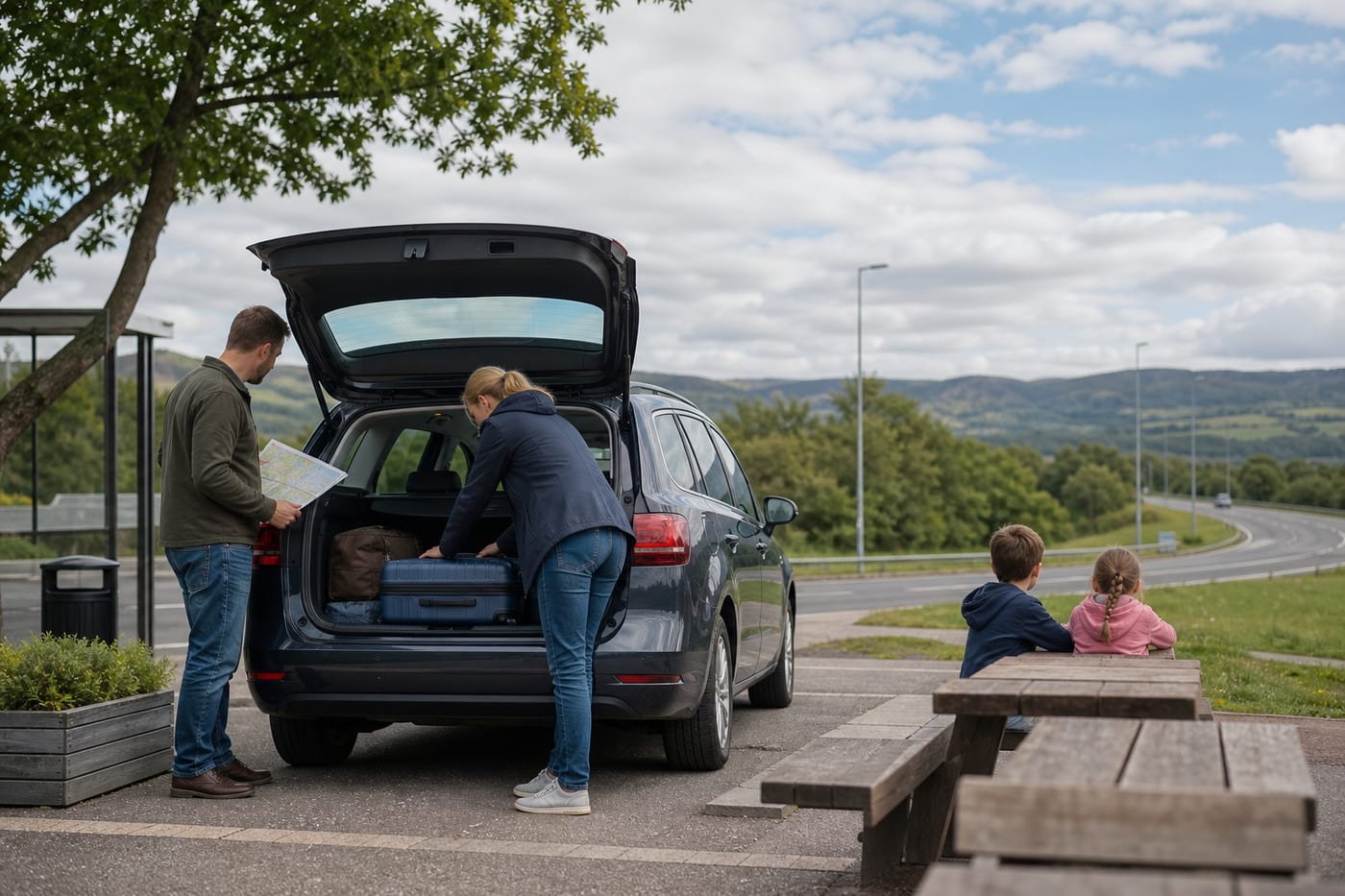
Check your route in advance, even if you intend to use satellite navigation. Look for likely congestion points, roadworks and suitable places to stop. It is useful to know your main route and one sensible alternative, but avoid making complicated changes while driving.
Allow extra time for holiday traffic. A schedule with no flexibility may encourage you to rush, follow too closely or skip essential rest breaks. If you have a ferry, flight or accommodation check-in to reach, build in a generous margin for delays.
Enter your destination into your navigation system before moving off. If the route needs to be changed later, ask a passenger to do it or pull over somewhere safe and legal.
Weather also deserves attention. Conditions at your destination may be very different from those at home, particularly on long journeys. Check the forecast for the full route and be prepared to postpone the trip if official advice indicates that conditions are dangerous. For journeys during the colder months, our festive winter driving advice covers ice, snow, darkness and seasonal preparation in more detail.
Complete essential vehicle checks
A breakdown is inconvenient at any time, but it can be particularly difficult when a car is carrying passengers, luggage and holiday equipment. Basic checks can identify problems before departure.
Tyres and tyre pressures
Check every tyre for cuts, bulges, embedded objects and uneven wear. For cars, the legal minimum tread depth is 1.6mm across the central three-quarters of the tyre and around its entire circumference. However, you should not wait until a tyre becomes illegal before replacing it if its condition is causing concern.
Adjust tyre pressures when the tyres are cold, using the figures in the vehicle handbook or on the manufacturer’s information plate. A heavily loaded car may require different pressures from those used for normal driving. Remember to check the spare wheel if your vehicle carries one, or confirm that the tyre repair kit is complete and usable.
Fluids, lights and visibility
Check the engine oil, coolant and windscreen washer fluid in accordance with the vehicle handbook. Do not remove a coolant cap when the engine is hot.
Make sure all lights are working and clean, including brake lights and indicators. Clean the windscreen, mirrors and camera lenses, and replace damaged or ineffective wiper blades. Good visibility is essential when driving into low sun, spray or heavy rain.
If warning lights appear or the vehicle has developed an unusual noise, vibration or handling problem, have it inspected before attempting a long trip.
Load the car safely
Holiday luggage can change how a vehicle accelerates, brakes and corners. It can also become dangerous if it moves during sudden braking or a collision.
Place heavy items low down and as far forward in the luggage area as practical. Secure loose objects and avoid stacking luggage above the top of the rear seats unless a suitable guard or restraint is fitted. Keep the driver’s view through the windows and mirrors clear.
Do not exceed the vehicle’s maximum permitted weight or the load limits for roof racks and roof boxes. These figures can be found in the relevant manufacturer instructions. Distribute weight evenly and check that a roof box, cycle carrier or trailer is correctly fitted before leaving.
Keep items needed during the journey accessible so that passengers do not have to disturb the main load. Water, medication, spare clothing and essential child supplies should be easy to reach when the car is safely parked.
Make sure every passenger is secure
The driver should not move off until everyone is wearing a seat belt and any child restraint is properly fitted. In general, children must use an appropriate child car seat until they are 12 years old or 135cm tall, whichever comes first, subject to limited legal exceptions.
The driver is responsible for ensuring that passengers under 14 use the correct restraint. Passengers aged 14 and over are responsible for wearing their own seat belts, but it is still sensible for the driver to check.
Fit child seats according to both the seat manufacturer’s instructions and the vehicle handbook. Remove bulky coats where they prevent a harness from fitting securely, and never place a rear-facing child seat in front of an active frontal airbag.
Pets should also be suitably restrained so they cannot distract the driver or injure themselves or other occupants. Depending on the animal and vehicle, this could mean a seat belt harness, pet carrier, dog cage or guard.
Prevent tiredness before it affects your driving
Long-distance driving requires sustained concentration. Warning signs of tiredness include repeated yawning, difficulty keeping your eyes open, drifting within the lane and struggling to remember the last few miles.
Do not begin a journey when you are already tired. The Highway Code advises drivers to take a break of at least 15 minutes after every two hours of driving. Some people will need to stop more often, particularly when driving at night or on monotonous roads.
Share the driving if another person is insured, licensed and fit to take over. If you start feeling sleepy, stop at the next safe place rather than trying to push on. Opening a window or turning up music is not a reliable solution to fatigue.
On very long trips, consider an overnight stop. Arriving later is always preferable to continuing when you cannot concentrate properly.
Keep distractions under control
Set the temperature, music and navigation before departure. Ask passengers to deal with messages, route changes and requests from children where possible.
It is illegal to hold and use a mobile phone or similar device while driving. This applies even when stopped in traffic. Put the phone away or use a driving mode that limits notifications. Although hands-free equipment may be legal, a conversation can still take your attention away from the road.
Children may become restless on a long journey, so plan regular stops and provide suitable activities that do not distract the driver. If a child or pet needs urgent attention, find a safe place to stop. Do not turn around or reach into the back while the vehicle is moving.
Adapt to traffic, weather and unfamiliar roads
Holiday routes often include rural lanes, busy motorways and roads you have never used before. Read signs early, keep a safe following distance and avoid last-minute lane changes. If you miss an exit, continue safely and let the navigation system find another route.
In wet weather, slow down and leave at least twice the normal gap from the vehicle ahead. Be alert for standing water and avoid driving through flood water when you do not know its depth. In hot weather, carry drinking water and never leave children or animals unattended in a parked vehicle.
Winter trips require extra planning for reduced daylight, ice and poor visibility. The practical checks in this guide to safer Christmas and winter journeys are also useful for ski trips, family visits and other cold-weather holidays.
Drive to the conditions rather than treating the speed limit as a target. A lower speed may be necessary on narrow lanes, around bends, near pedestrians or wherever visibility is restricted.
Pack useful emergency equipment
A small emergency kit can help if you are delayed or break down. Depending on the season and destination, consider carrying:
- A charged mobile phone and in-car charger
- Drinking water and non-perishable snacks
- Warm clothing or blankets
- A torch with spare batteries
- A basic first-aid kit
- A high-visibility vest for each occupant
- An ice scraper and de-icer in winter
- Any essential medication
- Breakdown provider and insurance contact details
These items do not replace proper vehicle maintenance or safe decisions, but they can make an unexpected delay easier to manage.
Before travelling outside the UK, check the official requirements for every country on the route. Equipment, insurance documentation, emission rules and road laws can differ.
Know what to do if you break down
If possible, leave the carriageway and stop in a place away from moving traffic. Switch on the hazard warning lights. On a motorway, use the hard shoulder or an emergency area if available, and stop as far to the left as you safely can.
If it is safe to leave the vehicle, occupants should exit on the side away from traffic and wait behind a safety barrier, well away from the carriageway. Do not attempt repairs in a dangerous position.
If your vehicle stops in a live traffic lane and you cannot get out safely, keep your seat belt on, switch on the hazard lights and call 999 immediately. Follow the instructions given by the emergency services or road operator.
Final holiday road trip checklist
Before pulling away, confirm that:
- The route, weather and planned stops have been checked
- Tyres, fluids, lights, windows and wipers are in good condition
- Luggage and external carriers are secure
- Passengers and pets are correctly restrained
- The driver is rested and fit to drive
- Phones and navigation are set up before departure
- Emergency supplies are easy to access
- There is enough time to complete the journey without rushing
Conclusion
A safer holiday road trip starts before the engine is switched on. Check the vehicle, secure the load, plan realistic breaks and remain prepared to change your plans if traffic, weather or tiredness makes the journey unsafe. Calm preparation gives everyone a better chance of arriving safely and enjoying the holiday.
Frequently asked questions
How often should I stop on a long road trip?
The Highway Code advises a break of at least 15 minutes after every two hours of driving. Stop sooner if you feel tired, lose concentration or need to attend to a passenger or pet.
Should I increase my tyre pressures when carrying holiday luggage?
A fully loaded vehicle may require different tyre pressures. Check the vehicle handbook or manufacturer’s information plate and adjust the pressures while the tyres are cold. Do not guess or use the maximum figure printed on the tyre as your normal setting.
What should I do if I miss a motorway exit?
Continue to the next suitable exit and allow your navigation system to recalculate the route. Never reverse, stop unnecessarily or make a sudden lane change to reach a missed exit.
Is it safe to drive through flood water?
Avoid flood water if you do not know its depth or whether the road beneath it is intact. Turn around and use another route where possible. Even apparently shallow water can hide hazards or affect a vehicle’s control and mechanical systems.