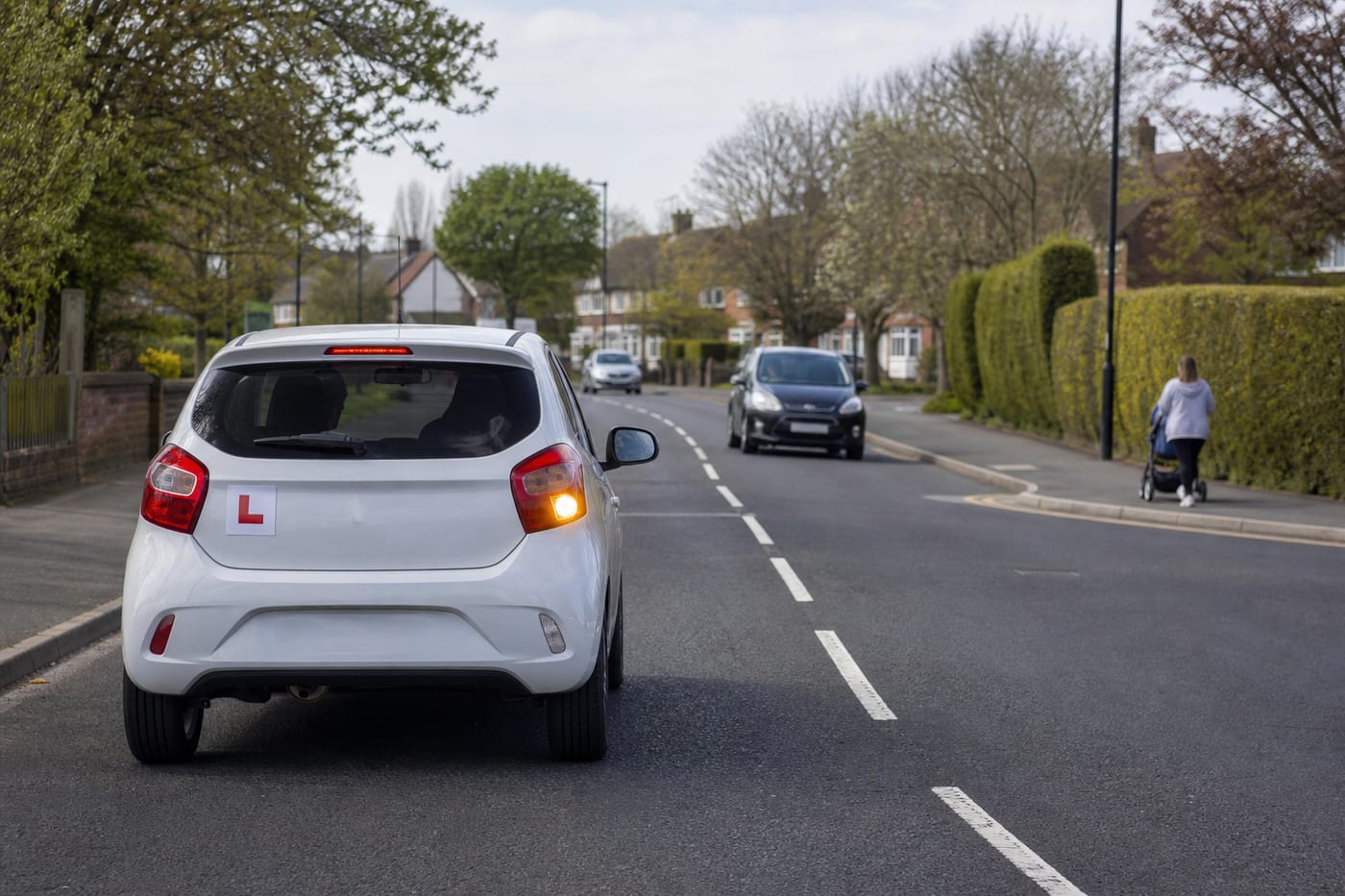
Turning right off a main road requires more planning than a simple change of direction. You may need to slow down or stop while traffic continues behind you, judge the speed of oncoming vehicles and check for pedestrians or cyclists near the side road.
For learner drivers, the key is to avoid rushing the decision. A safe right turn is built from early observation, a clear signal, controlled positioning and patience while waiting for a suitable gap.
This guide explains a reliable routine for turning right from a main road into a side road under normal UK driving conditions.
Why right turns need extra care
When turning right, your vehicle usually has to cross the path of oncoming traffic. You must not make another road user change speed or direction because you have entered their path.
At the same time, drivers behind may not expect you to slow down unless you communicate your intentions early enough. There may also be pedestrians crossing, or waiting to cross, the road you intend to enter.
Potential hazards include:
- Oncoming cars, motorcycles and cyclists
- Vehicles following too closely behind you
- Pedestrians crossing or waiting at the side road
- Cyclists approaching alongside your vehicle
- Parked vehicles restricting the entrance
- Poor visibility caused by bends, hills or large vehicles
- Road markings that alter where you should position
Recognising these as developing hazards is an important theory test skill. Practising how to identify them can also help you improve your hazard perception test performance.
The basic right-turn routine
A useful routine is mirrors, signal, position, speed and look. These stages should flow together rather than being treated as separate actions completed at fixed points.
1. Check your mirrors
Check the interior mirror and right door mirror before changing your speed or position. This tells you what is happening behind and to your right.
Pay particular attention to motorcycles and cyclists. A motorcyclist may be overtaking, while a cyclist could be travelling near the centre of the road or filtering through slow traffic. Do not move towards the centre until you know it is safe.
Your mirror checks should influence what you do next. For example, if a vehicle is following closely, you may need to signal slightly earlier and reduce speed more gradually. This does not mean continuing with an unsafe turn; it means giving the following driver more time to respond.
2. Signal in good time
Use your right indicator early enough to warn other road users, but not so early that it could mislead them. This is especially important if there are other side roads, driveways or entrances before the road you want.
A signal communicates your intention, but it does not give you priority. Continue checking around you and be prepared to wait.
Make sure the indicator cancels after the turn. If it does not cancel automatically, switch it off manually once the vehicle is established in the new road.
3. Position correctly
On an ordinary two-way road, position your vehicle just left of the centre line while keeping on your side of the road. This helps following traffic understand what you are doing and may allow traffic to pass on your left where there is enough safe, legal space.
Do not cross the centre line while waiting. If there are right-turn lanes, hatched areas or directional arrows, follow the road markings and signs.
Avoid swinging left before turning right. A normal car does not need this extra movement, and it may confuse following drivers or put cyclists at risk.
4. Reduce your speed
Slow down progressively as you approach the turn. Select a suitable gear in a manual car so that you retain control and can either continue smoothly or stop safely.
Try to complete braking and the necessary gear change before steering into the side road. Coasting with the clutch held down reduces control, while changing gear during the turn can add unnecessary workload.
If you need help coordinating the clutch, gears and braking, review these methods for smooth and safe manual gear changes.
5. Look and decide
Look ahead for oncoming traffic and assess the entrance to the side road. Check whether pedestrians are crossing or waiting to cross, and look for cyclists or motorcyclists who may be less obvious than larger vehicles.
Only turn when the gap is large enough for you to complete the manoeuvre safely without causing an oncoming road user to brake, swerve or slow down.
If you are unsure, wait. A driver behind may appear impatient, but they cannot see everything you can see. Their behaviour should never pressure you into accepting an unsafe gap.
How to judge a safe gap
Gap judgement improves with supervised practice. Rather than looking only at how far away a vehicle is, consider how quickly it is approaching and how long you need to complete the turn.
A distant motorcycle may arrive sooner than expected. A larger vehicle can hide another road user behind it, and an oncoming vehicle may accelerate after leaving a junction or bend.
Ask yourself:
- Can I cross the oncoming lane and enter the side road without rushing?
- Is the side-road entrance clear?
- Could a pedestrian step into the road?
- Is the oncoming vehicle travelling faster than it first appeared?
- Is my view blocked by another vehicle, a bend or the road’s gradient?
Do not rely on another driver flashing their headlights. Under the Highway Code, flashing headlights should only be used to let others know you are there. It does not automatically mean that it is safe to proceed. Make your own observations before moving.
Waiting safely for oncoming traffic
If oncoming traffic prevents the turn, stop in your correct road position and continue indicating. Keep the vehicle under control and remain ready to move when a genuinely safe opportunity appears.
In a manual car, the best control method depends on how long you expect to wait. For a brief pause, you may remain in first gear with the clutch controlled. For a longer wait, applying the parking brake and selecting neutral can reduce fatigue and prevent the vehicle from creeping.
Keep the steering generally straight while waiting rather than turning the wheels towards the oncoming lane. Do not start steering until you are ready to move into the turn.
Continue scanning. Conditions can change while you are stationary: a pedestrian may approach the side road, a cyclist may filter past or a vehicle behind the oncoming traffic may become visible.
Check the road you are entering
Finding a gap in oncoming traffic is only part of the decision. You must also ensure that the side road is safe to enter.
Give way to pedestrians crossing or waiting to cross a road into which you are turning. Reduce speed and be prepared to stop. Look carefully for children, older pedestrians and anyone whose movement may be difficult to predict.
Check for parked vehicles near the junction. If your side of the new road is obstructed, you may need to wait rather than turning directly into the path of traffic approaching within that road.
You should also look for cyclists travelling across or near the junction, including those using a cycle track. Never focus so heavily on the oncoming gap that you overlook a vulnerable road user.
Steering through the turn
When it is safe, move off positively but without harsh acceleration. Steer at the correct point so that you enter your own side of the new road.
Do not cut the corner. Cutting across the entrance could place you in conflict with a vehicle waiting to emerge or approaching the junction. Equally, do not turn so late that the car swings excessively wide.
Look into the new road rather than staring at the kerb or road centre. Your hands should guide the wheel smoothly, allowing it to return under control as the car straightens.
Once in the side road:
- Check that the indicator has cancelled
- Build speed appropriately for the conditions
- Check your mirrors again
- Stay alert for parked vehicles, pedestrians and further junctions
Using a right-turn lane
Some main roads provide a dedicated lane or marked area for right-turning traffic. Check your mirrors, signal and move into it when safe, following directional arrows and lane markings.
Do not enter the lane at the last moment or drift across without checking. Motorcycles or other vehicles may already be alongside you.
If the junction contains a yellow box, you must normally avoid entering unless your exit is clear. However, you may enter a box junction to wait when turning right if you are prevented from completing the turn only by oncoming traffic or by other vehicles waiting to turn right. You must still ensure there is somewhere safe to go once the oncoming traffic clears.
Common right-turn mistakes
Signalling too late
A late signal gives following drivers little warning that you are about to slow down. Begin your routine early enough to make your intentions clear.
Positioning too far left
Remaining close to the left while indicating right can confuse others and may obstruct traffic unnecessarily. Move towards the correct position when it is safe.
Crossing the centre line too soon
Do not place any part of your vehicle in the oncoming lane while waiting. Remain on your side until you can complete the turn.
Focusing only on cars
Motorcycles, cyclists and pedestrians can be harder to see and are more vulnerable. Search actively for them rather than relying on a quick glance.
Accepting a gap under pressure
Do not move simply because a driver behind sounds their horn or edges closer. Proceed only when your own observations confirm that it is safe.
Cutting the corner
Turning too early can take you onto the wrong side of the side road. Slow down sufficiently and steer into the correct lane.
These errors could result in driving faults during a practical test, depending on the circumstances and level of risk. Broader preparation is covered in these practical driving test strategies.
Practical ways to improve
Practise right turns on quiet, familiar roads before attempting busier routes. Ask your instructor to include different layouts, such as wide junctions, narrow side roads, filter lanes and roads with limited visibility.
Say the main hazards quietly to yourself during early practice: “mirror, signal, position, speed, pedestrians, oncoming traffic”. As the routine becomes familiar, your actions should become more natural.
After each attempt, consider whether you signalled at the right time, approached at a manageable speed and kept looking while waiting. Safe repetition is more valuable than trying to complete the turn quickly.
Frequently asked questions
Who has priority when I turn right off a main road?
You must give way to oncoming traffic when your turn crosses its path. You should also give way to pedestrians crossing or waiting to cross the road into which you are turning.
Should I stop before every right turn?
No. If the road is clear, the entrance is safe and you have an adequate gap, you may continue at a controlled speed. Be ready to stop whenever the situation is uncertain.
Can traffic pass me on the left while I wait?
Traffic may pass on the left if there is sufficient safe and legal space, but that decision belongs to the other driver. Do not move unpredictably to encourage them, and keep checking your mirrors for cyclists or motorcyclists.
What should I do if another driver flashes me to turn?
Do not assume the flash means the road is safe. Check the oncoming lane, the side road and nearby pedestrian or cycle routes yourself. Move only when your own observations confirm it is safe.
Conclusion
A safe right turn off a main road depends on observation, communication and patience. Check your mirrors, signal clearly, position correctly, control your speed and keep looking for oncoming traffic and vulnerable road users.
Never let pressure from behind influence your gap judgement. If the situation is not clearly safe, wait until it is.