

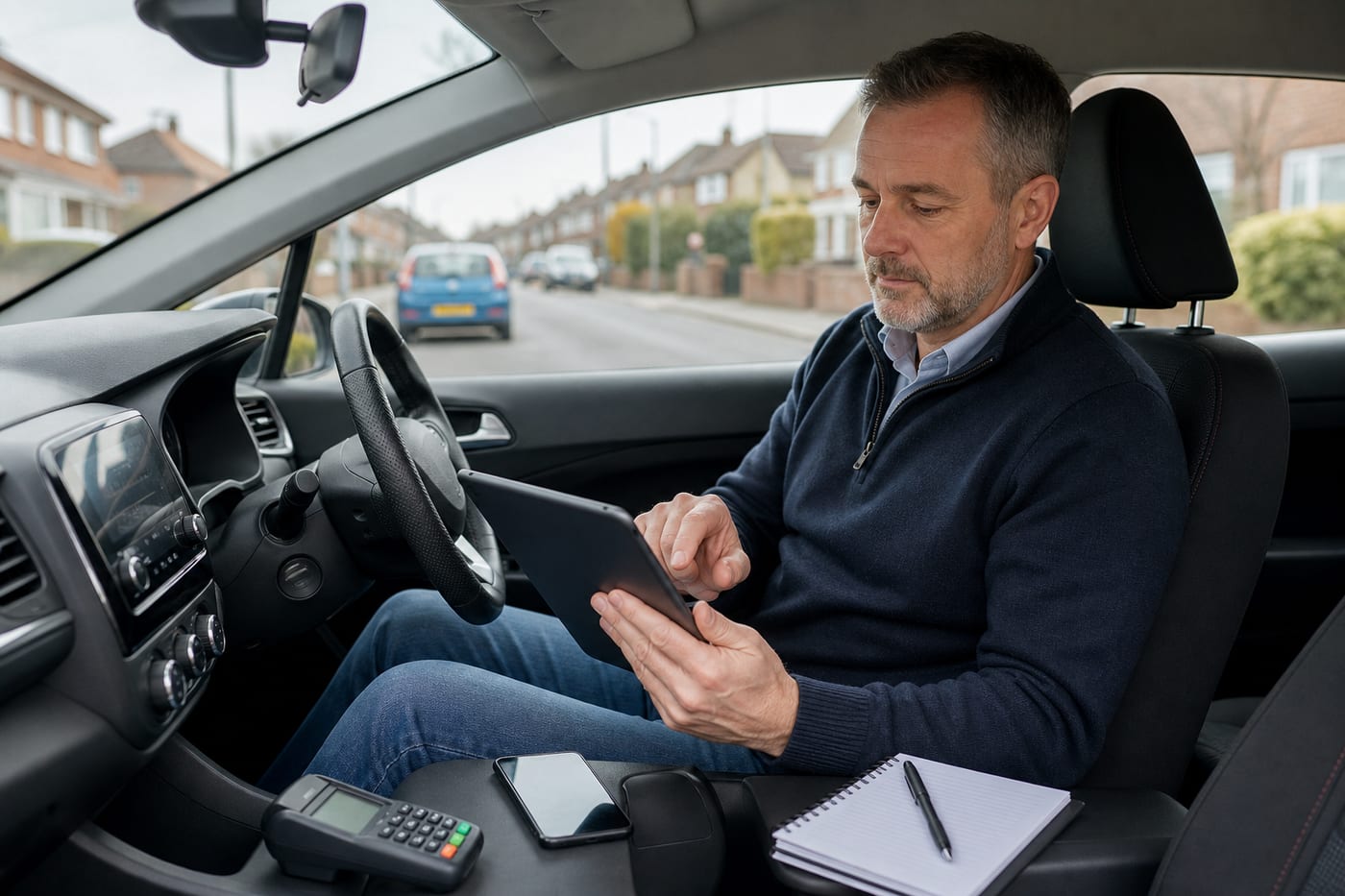
For a busy driving instructor, income is not determined only by the number of hours spent teaching. It is also shaped by cancellation gaps, unpaid lessons, inefficient journeys, forgotten follow-ups and the amount of unpaid time absorbed by routine administration.
Good admin will not replace high-quality instruction, but it can help you earn more from the working hours you already have. A reliable system also gives pupils a more professional experience, from their first enquiry to test day.
The aim is not to fill every minute or turn every conversation into a sales opportunity. It is to reduce avoidable losses, protect your time and make it easier for suitable pupils to book and pay.
Work out what each lesson slot is really worth
Start by looking beyond your headline lesson price. A slot that appears profitable may be less valuable once you include travel, fuel, vehicle costs, preparation and gaps between pupils.
Review a typical month and record:
- Total paid teaching hours
- Late cancellations and no-shows
- Unfilled diary gaps
- Time spent travelling between pupils
- Fuel and other vehicle costs
- Payment processing and booking costs
- Unpaid admin time
This does not need to become a complicated accounting exercise. A simple spreadsheet can reveal which parts of your week work well and which repeatedly lose money.
For example, two lessons at opposite ends of your teaching area may create an unusable gap between them. Rearranging pupils by location could let you offer another lesson without extending your working day.
Create a diary that reduces dead time
A full diary is not necessarily an efficient diary. Scattered bookings can result in more mileage, rushed arrivals and short gaps that cannot be sold.
Group bookings geographically
Divide your operating area into practical zones and, where possible, offer nearby pupils slots on the same day. You do not need to impose a rigid timetable, but suggesting a choice of efficient times is better than opening your entire diary to every enquiry.
Remember to allow realistic travel time. Building a diary around best-case journey times can lead to lateness and stress, particularly around school runs and peak traffic.
Use repeat appointments
Agreeing a regular weekly slot reduces the number of messages needed to arrange each lesson. It also helps pupils maintain continuity.
Confirm how recurring bookings work, including whether the pupil must notify you if they cannot attend. Do not assume that both parties have the same understanding of a permanent slot.
Keep a waiting list
Maintain a list of pupils who are willing to take short-notice lessons. Record their location, availability and preferred lesson length so that you can contact the right people quickly when a cancellation occurs.
A group broadcast may be convenient, but protect pupils’ personal information. Use a method that does not reveal recipients’ contact details to one another, and only send relevant messages to people who have agreed to receive them.
Set a clear and fair cancellation policy
Late cancellations are one of the most obvious sources of lost income. A written policy gives pupils clarity and makes it easier to handle cancellations consistently.
Your terms should explain:
- How much notice pupils should provide
- What may be charged for late cancellations or non-attendance
- How you will deal with genuine emergencies
- What happens if you cancel a lesson
- How prepaid credit, refunds and expired packages are handled
- Whether severe weather or an unsafe vehicle changes the arrangement
Terms should be transparent, fair and shared before the pupil commits to lessons. Avoid hiding important conditions in a long message after payment has been made.
Consistency matters, but so does reasonable judgement. Charging automatically in every exceptional situation may damage a productive instructor-pupil relationship. Equally, repeatedly waiving a published policy can make it ineffective.
Automated reminders sent a day or two before a lesson can prevent genuine mistakes. They should include the date, time, meeting point and any action the pupil needs to take.
Make payment simple and predictable
Chasing payment consumes time and creates uncertainty. Decide when payment is due and communicate the process before the first lesson.
Depending on your business, suitable options may include bank transfer, card payment, payment links or an integrated booking system. Compare fees, reliability and record-keeping features rather than choosing on convenience alone.
Consider requesting advance payment or a deposit when reserving a first lesson, longer session or intensive course. Make the refund and cancellation terms clear before taking money.
Block bookings can improve cash flow and encourage regular attendance, but they create obligations. Keep accurate records of lessons used and credit remaining. Avoid treating all advance payments as immediately earned, because you still need to provide the booked service or deal with any refund rights that apply.
Standardise enquiries and pupil onboarding
Answering the same questions manually can take a surprising amount of time. Create reusable templates for common enquiries while keeping the tone personal.
An initial response can cover:
- Areas and postcodes served
- Current availability
- Lesson lengths and prices
- Manual or automatic tuition offered
- Licence and eyesight requirements
- Payment and cancellation terms
- Information needed before the first lesson
Use an online form or structured message to collect essential details. Only ask for information you genuinely need, store it securely and restrict access to it. Health information and driving licence details require particular care.
If a pupil mentions a medical issue that may affect driving, do not attempt to make a licensing decision yourself. Direct them towards official guidance and an appropriate professional where necessary. Our overview of medical conditions learner drivers may need to report to the DVLA can help pupils understand the issue before checking the current official requirements.
Turn lesson notes into a retention tool
Useful progress records are not just administrative evidence. They show pupils what they have achieved, what still needs work and why further practice is recommended.
After each lesson, record concise notes such as:
- Skills covered
- Level of prompting required
- Recurring faults or risks
- Agreed private practice
- Focus for the next session
- Progress towards independent driving
Sharing a short summary can improve confidence and reduce vague discussions about readiness. It may also discourage pupils from booking a practical test before they can demonstrate the required standard consistently.
You can support these conversations with a reliable resource on strategies for preparing for the practical driving test. The purpose is not to sell unnecessary lessons, but to make the pupil’s development and next steps clear.
Follow up without becoming pushy
Some pupils disappear because of money, work, illness or a loss of confidence. Others simply forget to arrange their next lesson.
Create a light-touch follow-up system for pupils who have not rebooked. One friendly message asking whether they want to reserve another slot may be enough. If they do not respond, avoid repeated pressure.
You can also schedule helpful messages at natural stages, such as:
- A welcome message before the first lesson
- A progress summary after an agreed number of lessons
- A test-day checklist
- A post-test message requesting feedback
- A reminder to resume after a planned break
Ask satisfied pupils for an honest review, but never tell them what to write or make support conditional on leaving positive feedback. Genuine reviews can help future pupils decide whether your teaching style suits them.
Review prices instead of relying on habit
Keeping the same price indefinitely can gradually reduce profitability as costs change. Review pricing periodically using your own operating expenses, local market, experience, demand and lesson format.
Do not focus only on competitors’ advertised hourly rates. Their costs, coverage, vehicle and availability may be different from yours. Your price needs to support safe, professional tuition and a sustainable business.
If you change prices, give existing pupils clear notice and explain when the new rate begins. Update every place where prices appear so that your website, booking messages and terms do not contradict one another.
You could also offer different lesson lengths where appropriate. Longer sessions may reduce repeated pickup time and suit pupils working on rural roads, dual carriageways or test preparation. However, they should be educationally suitable rather than used simply to increase the booking value.
Use seasonal planning to stabilise demand
Demand and road conditions can vary throughout the year. Plan communications and diary capacity before predictable periods such as school holidays, dark winter evenings and the run-up to Christmas.
Seasonal resources can provide useful support between lessons. For example, pupils and newly qualified drivers may benefit from practical advice for safer festive winter driving. Sharing relevant guidance helps maintain contact without sending a sales message every time.
Build contingency time into winter schedules and explain that lessons may need to change if conditions make driving unsafe. Protecting income never takes priority over safety.
Keep business and tax records up to date
Leaving bookkeeping until the tax deadline makes it easier to miss expenses, lose receipts or misunderstand cash flow. Set aside a short weekly admin session to reconcile payments and record costs.
Keep business and personal spending separate where practical. Store invoices and receipts in an organised digital system, with secure backups. Vehicle expenses can be complex, particularly where a car has both business and private use, so use current HMRC guidance or consult a qualified accountant.
Track money set aside for tax rather than assuming that the account balance is available to spend. Accurate records also make it easier to decide whether a new car, diary system or advertising channel is genuinely affordable.
Automate tasks, not relationships
Booking software can handle reminders, payment requests, recurring appointments and basic record-keeping. Templates can speed up common messages. These tools are valuable when they remove repetitive work.
However, automation should not make pupils feel ignored. Check that messages are accurate, provide a way to contact you and avoid sending unsuitable reminders after a test cancellation, illness or course completion.
Introduce one system at a time. Paying for several overlapping apps can increase costs and create more administration rather than less.
Conclusion
The most effective admin hacks help a driving instructor protect existing income before trying to work additional hours. A geographically sensible diary, clear terms, prompt payments, accurate progress notes and regular bookkeeping can all reduce waste.
Choose one recurring problem, measure its effect and introduce a simple process to address it. Small improvements are easier to maintain and can create a more reliable business as well as a better experience for pupils.
Frequently asked questions
Should driving instructors take payment before a lesson?
Advance payment can reduce payment chasing and discourage casual non-attendance. If you use it, explain when payment is due and provide clear, fair terms covering cancellations, instructor cancellations, unused credit and refunds.
How can an instructor fill a last-minute cancellation?
Keep an opt-in waiting list organised by location and availability. When a slot opens, contact suitable pupils with the lesson time and meeting area. Protect recipients’ contact details and avoid promising the same slot to several people without explaining how it will be allocated.
Is booking software essential for a driving instructor?
No. A well-managed calendar, spreadsheet and message templates may be enough for a smaller diary. Software becomes useful when automated reminders, online payments and recurring bookings save more time than the system costs to run.
How often should lesson prices be reviewed?
There is no single required schedule, but prices should be reviewed regularly enough to reflect changes in fuel, insurance, vehicle, training and administrative costs. Give pupils clear notice of any increase and ensure all published prices are updated consistently.