Passing the driving theory test is an essential step towards gaining a full UK driving licence. It checks more than your ability to memorise road signs: you must understand how to apply road rules and identify developing dangers before they become emergencies.
For most learners, the car theory test has two parts: multiple-choice questions and hazard perception. You must pass both parts at the same appointment. This guide explains how the test works in Great Britain, what happens on the day and how to prepare effectively.
Theory tests in Northern Ireland are administered by the Driver & Vehicle Agency rather than the Driver and Vehicle Standards Agency. If you live in Northern Ireland, check the current DVA arrangements because booking procedures and test conditions may differ.
What Is the UK Driving Theory Test?
The theory test assesses whether you have the knowledge and awareness needed to begin driving independently and safely. For car learners in Great Britain, it is delivered by the DVSA at an approved theory test centre.
You normally need to pass the theory test before booking your practical driving test. However, theory study should not be treated as a separate academic exercise. Lessons and private practice help you see how rules about junctions, stopping distances, road signs and vulnerable road users work in real situations.
If you are at the beginning of your learning journey, our guide to driving at 17 in the UK explains provisional licences, supervision and insurance requirements.
The Two Parts of the Car Theory Test
The car theory test consists of:
- A multiple-choice section
- A hazard perception section
You take both sections during the same appointment. Passing one section does not compensate for failing the other, so you must reach the required mark in each part.
Part One: Multiple-Choice Questions
The multiple-choice section contains 50 questions, and you have 57 minutes to complete it. The pass mark is 43 out of 50.
Questions are based on topics including:
- Alertness and attitude
- Essential documents
- Road signs and markings
- Rules of the road
- Motorway driving
- Safety margins and stopping distances
- Vehicle handling
- Vehicle loading
- Vulnerable road users
- Accidents, incidents and emergencies
- Vehicle safety
Some questions may be presented as a short case study. You are given information about a driving situation and then answer several questions about it. The test may also use a short silent video followed by questions about what you have seen.
You select answers on a computer screen. Most questions require one answer, although a question will clearly tell you if more than one option is needed.
You can flag uncertain questions and return to them before the section ends. This is useful when an answer does not immediately come to mind, but do not leave flagged questions unanswered accidentally.
Part Two: Hazard Perception
The hazard perception section tests how quickly you recognise developing hazards. It uses 14 video clips showing everyday road scenes, and one clip contains two developing hazards.
There are 15 scoreable developing hazards in total. You can score up to five points for each one, giving a maximum possible score of 75. The pass mark for car drivers is 44 out of 75.
A developing hazard is something that would cause you to take action, such as changing speed or direction. A parked vehicle is a potential hazard, but it becomes a developing hazard if it begins indicating and moving into your path. Similarly, a child near the pavement becomes a developing hazard when they start moving towards the road.
You score more points by responding while the hazard is beginning to develop. Clicking continuously or in a clear repeated pattern may result in no score for that clip. The aim is not to guess wildly but to respond when you see genuine signs of danger.
For more detailed guidance, use our strategies for scoring highly on the hazard perception test.
What Happens During the Test?
Before each section, you receive instructions explaining how the system works. There is also an opportunity to see how the multiple-choice format operates before the scored questions begin.
After completing the multiple-choice section, you can take a break of up to three minutes before starting hazard perception. You will then watch an introductory video explaining how that section works.
You cannot return to the multiple-choice questions once you have moved on to hazard perception.
The full appointment takes longer than the 57-minute question period because it includes registration, instructions, the break and the hazard perception clips. Arrive in good time rather than planning to enter at the last minute.
How to Book Your Theory Test
You need a provisional driving licence before booking. Use the official government booking service and be cautious of third-party websites that charge extra fees or imitate official services.
The standard car theory test fee in Great Britain is £23. Check the official service before booking in case the fee or arrangements have changed.
When booking, you will need information from your driving licence and a payment method. Choose a centre and date that allow enough time for structured revision. Booking too soon can leave you rushing, while delaying indefinitely may reduce your motivation.
Scammers and unofficial booking businesses can appear convincing. The advice in our guide to spotting fake driving test booking services can help you protect your money and personal details.
What to Take to the Theory Test Centre
Follow the identification instructions in your booking confirmation carefully. Most candidates must bring their UK photocard driving licence. Different requirements may apply if you have an old-style paper licence or a Northern Ireland licence.
If you do not bring the correct identification, you may not be allowed to take the test and may lose your fee.
Personal belongings are not permitted in the testing room. You will normally be asked to store items such as your mobile phone, watch, bag and study materials securely before entering. Test centre staff will explain the security procedure.
Do not take revision notes into the room or attempt to record test content. Theory test questions and materials are protected, and misconduct can lead to serious consequences.
Support and Accessibility Arrangements
Help may be available if you have a reading difficulty, disability, health condition or other support need. Depending on your circumstances, arrangements can include extra time, a voiceover or assistance from a reader.
You should request support when booking rather than waiting until test day. The booking service may ask for evidence so that the appropriate arrangements can be made.
The test is available in English, with Welsh-language provision available at test centres in Wales. British Sign Language support can also be requested. Always check the current official options for your location and needs.
How to Prepare Effectively
Learn the Rules Before Drilling Questions
Practice questions are useful, but memorising answers without understanding the rule is risky. The wording and scenario in the real test may be different.
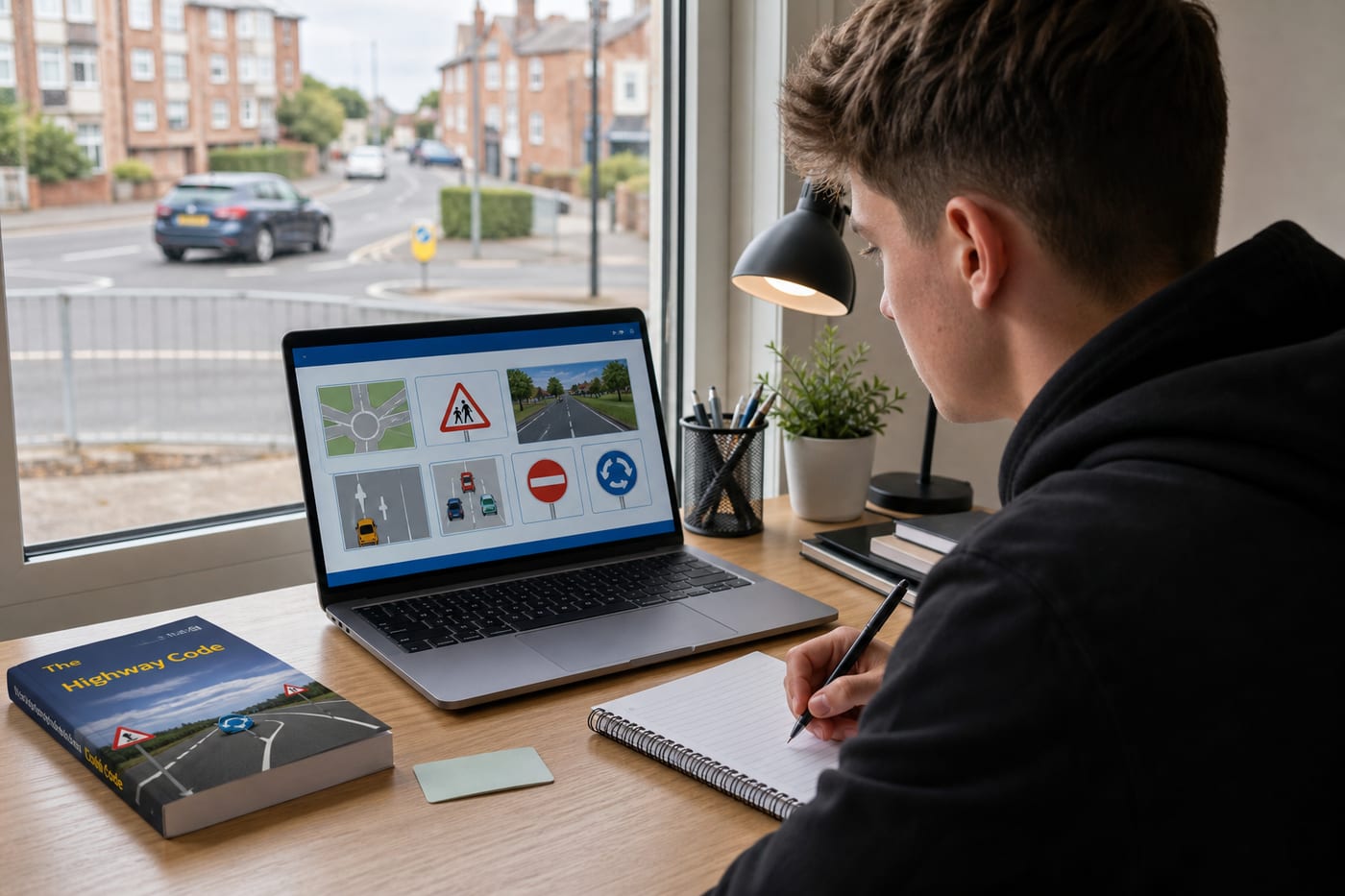
Study the current editions of The Highway Code, Know Your Traffic Signs and the relevant DVSA learning materials. Break the syllabus into manageable subjects and revisit weaker topics regularly.
Use Active Recall
After studying a subject, close your materials and write down what you remember. For example, sketch road signs from memory or explain how you should react at a pedestrian crossing.
Review incorrect answers carefully. Record why your answer was wrong and what rule should guide you next time. This turns mistakes into useful revision rather than simply repeating the same mock test.
Practise Under Timed Conditions
Once you understand the topics, complete full mock tests with a 57-minute limit. Aim to score consistently above the pass mark, not just reach 43 once.
Timed practice helps you balance careful reading with steady progress. Watch for words such as “must”, “should”, “first” and “most”, which can change what a question is asking.
Develop Hazard Awareness on Lessons
During driving lessons, look well ahead and discuss potential hazards with your instructor. Notice side roads, brake lights, pedestrians, cyclists, roadworks and vehicles with restricted visibility.
As a passenger, you can also practise scanning the road without distracting the driver. Ask yourself what could change and what action might become necessary.
Avoid Last-Minute Cramming
A short final review is sensible, but studying late into the night may leave you tired and unfocused. Prepare your identification, route and appointment details in advance, then prioritise sleep.
Common Reasons Learners Fail
Frequent problems include:
- Depending entirely on memorised mock-test answers
- Skimming questions and missing important wording
- Neglecting less familiar topics such as vehicle loading or documents
- Clicking too early during hazard perception
- Waiting until a hazard is fully obvious before clicking
- Clicking constantly or using a repeated pattern
- Sitting the test before achieving reliable mock-test results
Another mistake is assuming practical experience covers everything. Lessons are invaluable, but some legal, environmental and vehicle-safety topics may not arise regularly on the road.
What Happens After the Test?
You receive your result after completing both sections. If you pass, keep your pass certificate details safe because you will need them when arranging the practical test.
A theory test pass for a car is normally valid for two years. You must pass your practical driving test within that period. If the certificate expires first, you will need to pass the theory test again.
If you fail, your result will show your scores for both sections. Use this information to target your revision. You must wait at least three working days before taking the test again.
Frequently Asked Questions
Can I book my practical test before passing the theory test?
For a standard car licence, you normally need to pass the theory test before booking the practical test. Keep your theory pass details available when making the booking.
Do I have to pass both sections on the same day?
Yes. You must reach at least 43 out of 50 in the multiple-choice section and 44 out of 75 in hazard perception. If you fail either part, you must retake the complete theory test.
How long should I revise for the theory test?
There is no single ideal period. Your readiness matters more than the number of weeks spent revising. Study the full syllabus and wait until you can pass realistic mock tests consistently while also demonstrating sound hazard perception.
Can I change or cancel my theory test?
Yes, but notice requirements apply if you want to avoid losing the fee. Use the official booking service and check the current deadline, including how working days are counted.
Conclusion
The UK car theory test combines 50 multiple-choice questions with 14 hazard perception clips. Passing requires a solid understanding of road rules and the ability to recognise danger as it develops.
Prepare across the whole syllabus, practise both sections under realistic conditions and learn from every incorrect answer. With structured revision and good observation during driving lessons, the theory test becomes a valuable foundation for safer driving—not simply a hurdle before the practical test.