
A frozen car can turn an ordinary winter morning into a frustrating rush. However, scraping a small viewing hole in the windscreen and setting off is neither safe nor sufficient. You need clear windows, mirrors, lights and number plates before beginning your journey.
The safest approach is to allow extra time, use a suitable de-icer and remove the softened ice with a proper scraper. You should also demist the inside of the vehicle and clear any snow that could fall into the path of another road user.
Here are the best ways to de-ice your car efficiently, along with the methods that could cause damage or leave you unable to see properly.
What you need to de-ice a car
Keeping a few basic winter items ready can make the job much easier. Useful equipment includes:
- A good-quality plastic ice scraper
- De-icer suitable for vehicle windows
- A soft snow brush
- Winter-ready screen wash
- A clean microfibre cloth for interior condensation
- Gloves and warm, waterproof clothing
Store the scraper and de-icer somewhere accessible. If they are locked inside a heavily frozen car, they may not be much help. Keeping spare de-icer indoors can be useful, provided it is stored according to the manufacturer’s instructions and away from children or sources of heat.
Avoid using a metal scraper or any improvised tool with a hard edge. These can scratch the glass, damage seals or mark the paintwork.
The best step-by-step method for removing ice
1. Check that the exhaust is clear
If snow has built up around the rear of the car, check that the exhaust pipe is not blocked before starting the engine. Exhaust gases need to escape safely.
Never run the engine in a closed garage. If the car is garaged, open the garage door and, where practical, move the vehicle into the open before leaving the engine running.
2. Start the car and use its heating systems
Start the engine and select the windscreen demisting or defrosting setting. Direct warm air towards the windscreen and switch on the heated rear window. Use heated mirrors and a heated windscreen if your car has them.
Air conditioning can help remove moisture from the cabin, even in winter. Follow the vehicle handbook if you are unsure which settings to use.
Stay with the car while the engine is running. Leaving a vehicle unattended with its keys inside creates an obvious security risk. It may also invalidate an insurance claim if the car is stolen, depending on the policy.
Do not rely on prolonged idling as the only solution. The heating system can begin loosening the ice while you work outside, but a scraper and de-icer will usually complete the job more quickly.
3. Remove loose snow first
Use a soft brush to clear snow from the roof, bonnet, windows, lights and number plates. Work carefully so that grit trapped beneath the snow does not scratch the paint.
Removing snow from the roof matters because it could slide over the windscreen when you brake or fall into the path of another road user. Snow covering lights or number plates must also be cleared.
If snow is deep, clear enough space around the car to enter it safely and check that the wheels are not obstructed.
4. Apply a suitable de-icer
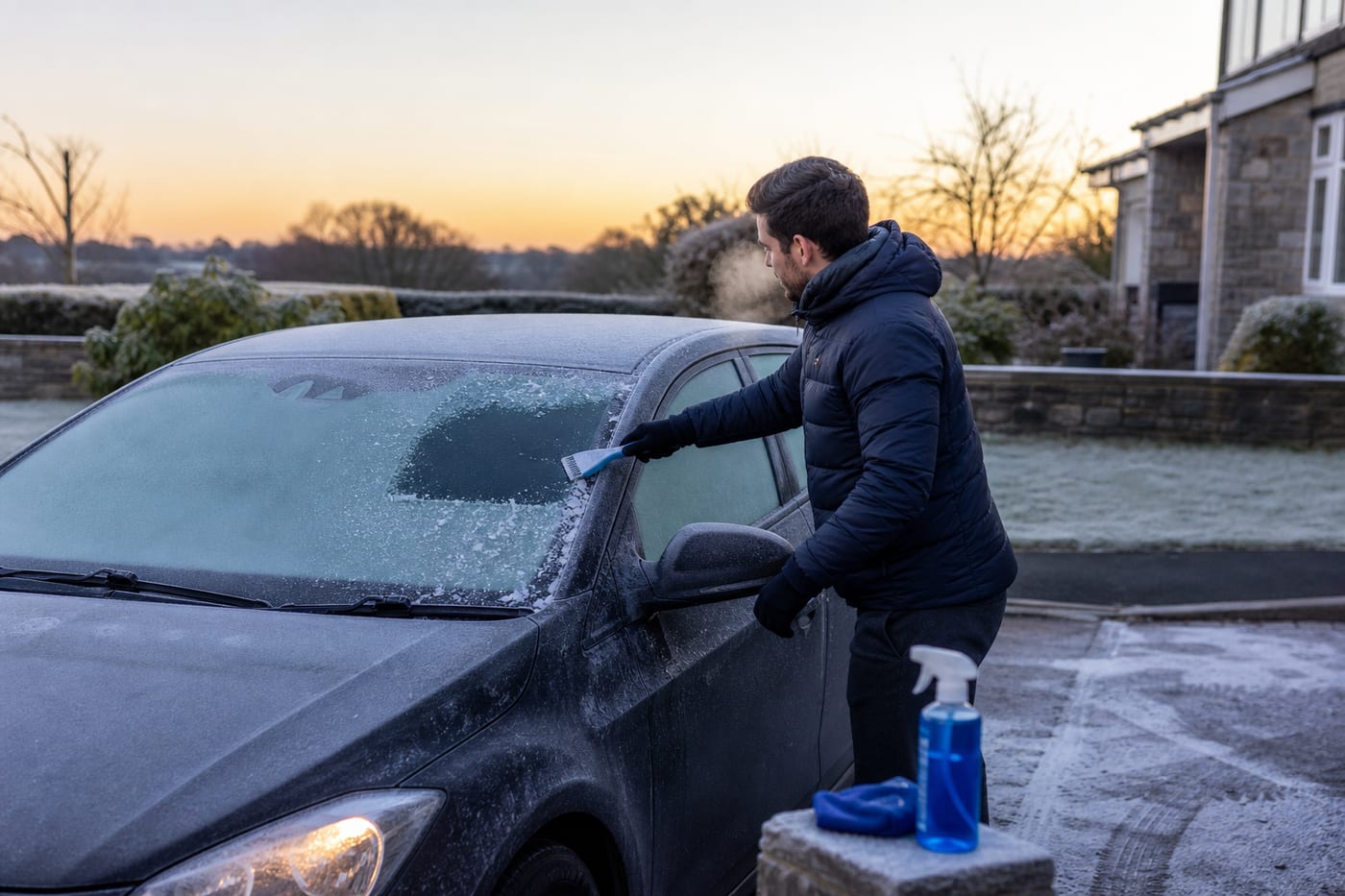
Spray vehicle de-icer evenly over the windscreen and other frozen windows. Give it time to work rather than immediately trying to force off solid ice.
Use the product as directed and avoid excessive spray around paintwork or rubber components. Clean up any spills where necessary. Keep the spray away from your face and wash your hands after use.
Some drivers use homemade solutions, but a purpose-made automotive product is generally the more dependable choice. It provides clear usage and storage instructions and is designed for use on vehicle glass.
5. Scrape the softened ice
Use a plastic scraper with firm, controlled strokes. Begin at an edge where the de-icer has started to penetrate beneath the ice. Keep the scraper flat against the glass rather than attacking it with a corner.
Clear the entire windscreen, not just the area directly in front of the steering wheel. Then clear:
- Both front side windows
- Both rear side windows where needed for visibility
- The rear window
- All exterior mirrors
- Headlights and rear lights
- Indicators and reflectors
- Front and rear number plates
- Any cameras or sensors needed by the vehicle’s safety systems
Pay attention to the area around the windscreen wipers. Ice can hold the blades in place or prevent them from making proper contact with the glass.
6. Free the wipers carefully
Do not switch on frozen wipers. Doing so can damage the rubber blades, linkage or motor. It may also tear blades that have frozen to the windscreen.
Allow the demister and de-icer to loosen them first. Lift each blade gently only after it has released. Clear ice from the blade and the channel beneath it, then check that the rubber has not split.
Use the washers only when the windscreen is clear enough and you know the jets and fluid are not frozen. Your screen wash should be mixed to the concentration recommended for the expected temperature. Water alone may freeze in the reservoir, pipes, jets or on the windscreen.
Our guide to checking vital engine fluids safely explains how to inspect and top up screen wash alongside other important fluids.
7. Demist the inside of the windows
External ice is only half the problem. Moisture inside the cabin can create mist or even a thin layer of internal frost.
Use the demisting controls, heated screens and air conditioning where available. A clean microfibre cloth can remove stubborn condensation, but wiping should support the ventilation system rather than replace it. A dirty cloth may leave smears that become particularly troublesome in low winter sunlight.
Before moving off, complete your normal checks. The essential pre-drive cockpit safety routine covers seat adjustment, mirrors, seat belts, controls and observations.
Methods you should avoid
Do not pour hot water on frozen glass
Boiling or very hot water can expose cold glass to a sudden temperature change and risk damaging it. Water can also run onto the ground and refreeze, creating a slippery surface around the vehicle.
Even lukewarm water is not an ideal routine because it may refreeze on the windscreen, wipers, seals or door handles. A scraper, de-icer and the car’s heating system are safer and more controlled.
Do not use a bank card or metal object
A bank card can snap, become damaged or leave you with painfully cold fingers. Metal tools, keys and kitchen utensils can scratch glass and paintwork or damage seals.
A purpose-made plastic scraper is inexpensive, easier to grip and designed for the task.
Do not use the wipers as ice scrapers
Wipers are designed to move water, not cut through frozen deposits. Operating them while they are stuck can damage several parts of the mechanism.
Wait until the ice has softened, release the blades by hand and clear the glass properly before testing them.
Do not drive with a small viewing hole
A small cleared patch does not give you an adequate view of pedestrians, cyclists, approaching traffic or hazards at junctions. It also leaves side windows and mirrors obstructed.
The Highway Code says that before setting off, you must be able to see and that snow and ice should be cleared from all windows. It also says lights and number plates should be clear and visible, mirrors should be clear, and snow that might fall into the path of other road users should be removed.
How to prevent ice forming overnight
Prevention can shorten your morning routine considerably.
A correctly fitted windscreen cover protects the main area of glass. Secure it according to its instructions so that it cannot blow away or damage the vehicle. Do not use boiling water to free a cover that has frozen in place.
If possible, park in a garage or in a sheltered position. Parking the windscreen away from the prevailing wind may reduce frost build-up, although conditions can change and ice may still form.
Make sure wet coats, umbrellas and floor mats are not leaving unnecessary moisture inside the cabin. Persistent internal condensation can also indicate a wet interior, blocked drainage or another fault that may need investigation.
Prepare before a cold spell by checking the battery, tyres, lights, wipers, coolant and screen wash. For broader seasonal preparation, see our festive winter driving advice.
Practical advice for learner drivers
If you have a lesson or practical test on a frosty morning, plan to arrive early. De-icing cannot be rushed, and setting off stressed can affect your concentration.
Ask your instructor to show you the heating and demisting controls in the tuition car. Controls vary between vehicles, so knowing the correct buttons and airflow settings in advance is useful.
During theory test preparation, remember that clear vision is part of making a vehicle safe before a journey. Removing ice is not merely about comfort; it enables proper observations and helps other people see your lights and number plates.
Once on the road, continue to treat icy conditions with care. De-icing the vehicle does not remove frost from the road. Accelerate, steer and brake smoothly, increase the gap from the vehicle ahead and be particularly cautious on bridges, shaded roads and untreated surfaces.
Conclusion
The best way to remove ice from a car is to combine the vehicle’s demisting system with automotive de-icer and a plastic scraper. Clear every window, mirror, light and number plate, remove loose snow, and free the wipers before using them.
Allowing a few extra minutes is far safer than using hot water, unsuitable tools or driving with restricted visibility. Good preparation will also make cold mornings less stressful.
Frequently asked questions
Can I pour warm water on my windscreen to remove ice?
It is better not to. A sudden temperature change may damage cold glass, while the water can refreeze on the car or ground. Use de-icer, a plastic scraper and the windscreen demister instead.
Can I drive while the windscreen is still partly frozen?
You should not set off until you have a clear view through all necessary windows and mirrors. Clear the whole windscreen rather than making a small viewing hole, and remove ice or snow from lights and number plates as well.
Should I lift my windscreen wipers overnight?
Some drivers do this to stop the blades freezing to the glass, but raised wiper arms can be vulnerable to wind or accidental impact. Check your vehicle handbook, and never force frozen blades away from the windscreen.
What should I do if my car door is frozen shut?
First check whether another door opens normally. Apply a suitable lock or seal de-icer according to its instructions and allow it time to work. Do not yank the handle, force the key or pour hot water over the lock and seals, as this may cause damage or refreeze.