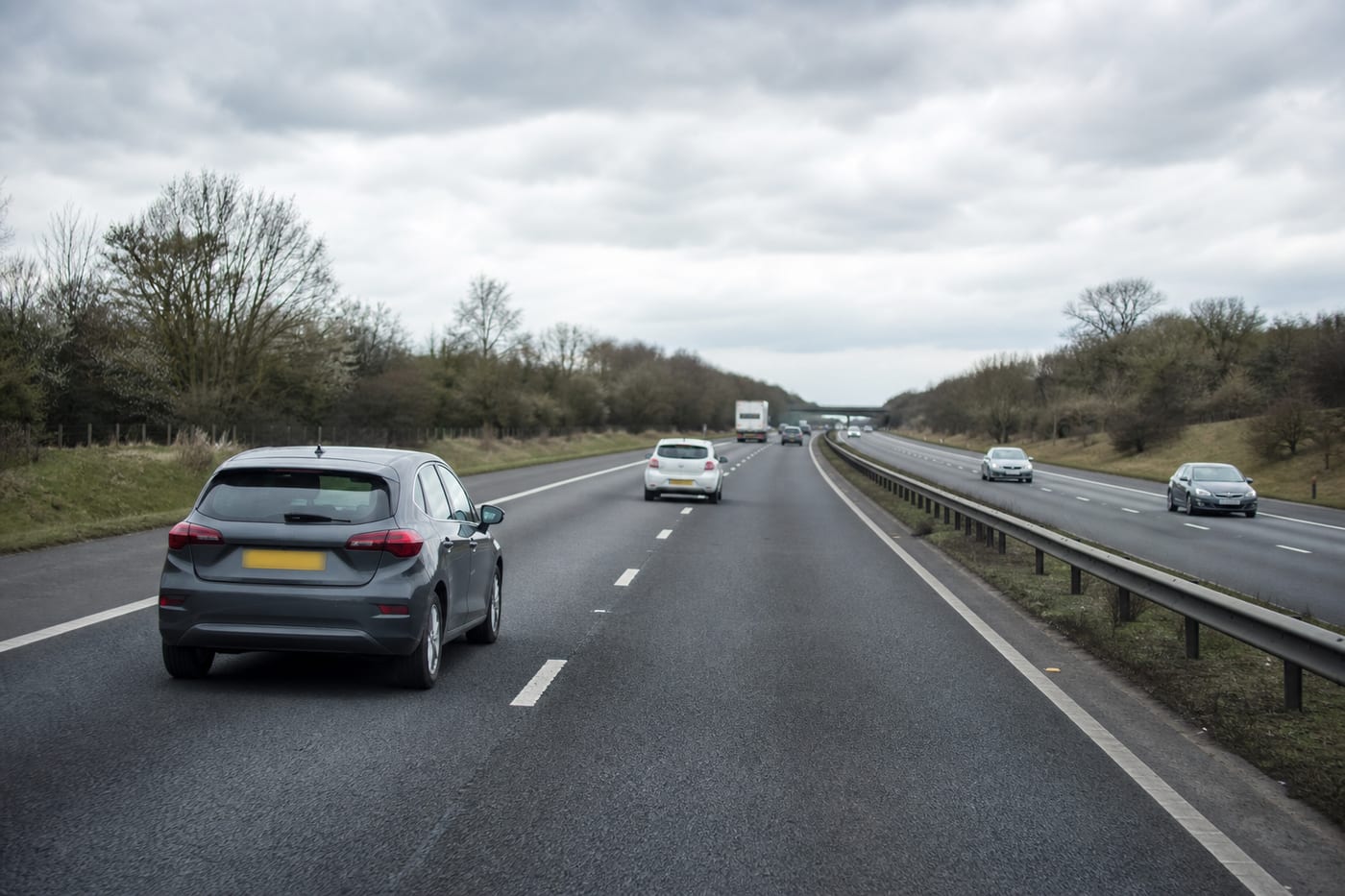
Motorways can feel intimidating when you first use them. Traffic often travels quickly, junctions require early planning, and a small mistake can become serious when vehicles are covering long distances every second.
However, motorways are designed for efficient, predictable travel. There are no pedestrians, conventional junctions or tight bends under normal conditions, and traffic travelling in the same direction is separated into marked lanes. Once you understand how to join, maintain a safe position and leave correctly, motorway driving becomes much more manageable.
This guide explains the essential UK motorway rules and the practical habits that help you stay safe.
Before starting a motorway journey
A few basic checks can prevent avoidable trouble. Make sure you have enough fuel or charge to complete the journey with a sensible reserve. Check that your tyres appear properly inflated and free from visible damage, and confirm that your lights, indicators and windscreen washers work.
Check engine oil, coolant and screen wash regularly, particularly before a long journey. Our guide to checking vital engine fluids safely explains how to do this correctly.
Plan your route before moving off. Note the motorway numbers, important junctions and the direction or destination shown on signs. A sat-nav can help, but it should not distract you or replace road signs. Set it before travelling and position it where it does not obstruct your view.
You should also be fit to drive. Do not begin a long motorway journey if you are excessively tired, unwell or unable to concentrate. Take regular breaks and stop somewhere safe if tiredness develops. Opening a window or turning up the radio is not a reliable cure for fatigue.
Who can drive on a motorway?
Motorways are identified by blue signs and have specific restrictions. Pedestrians, cyclists, horse riders, mobility scooters and certain slow or restricted vehicles must not use them.
Learner drivers in England, Scotland and Wales may have motorway lessons only when accompanied by an approved driving instructor in a car fitted with dual controls. They cannot practise on a motorway with a parent, friend or other supervising driver. Rules for learner drivers differ in Northern Ireland, so learners should check the current official guidance for the part of the UK in which they are driving.
You do not have to take a motorway lesson before passing the practical test, but professional tuition can be valuable. Newly qualified motorists may also benefit from extra lessons before attempting a busy motorway alone. Further advice is available in our guidelines for newly licensed drivers.
How to join a motorway safely
You will normally enter a motorway using a slip road. The slip road allows you to build up an appropriate speed and find a suitable gap before merging with traffic in the left-hand lane.
Traffic already on the motorway has priority. Do not expect another driver to move over for you, even though some may do so when it is safe.
As you travel along the slip road:
- Check your mirrors early to assess traffic speed and density.
- Accelerate to match the speed of motorway traffic where conditions allow.
- Look for a safe gap rather than focusing on a single vehicle.
- Signal right in good time.
- Check your right-hand mirror and blind spot before merging.
- Adjust your speed smoothly and enter without forcing another driver to brake or change direction.
Avoid stopping at the end of the slip road unless congestion or another emergency makes it unavoidable. Joining too slowly can also be dangerous because it creates a large speed difference between you and approaching traffic.
If the motorway is busy, remain calm and keep reassessing the available gaps. Never cross solid white lines or use the hard shoulder to extend the slip road.
Keep left unless you are overtaking
Correct lane discipline is one of the most important motorway skills. On a conventional three-lane motorway, use the left-hand lane for normal driving. Use the middle or right-hand lane to overtake, then return to the left when it is safe.
Do not remain in the middle lane when the left lane is clear. Unnecessary middle-lane driving reduces available road space and may encourage other motorists to make unsafe manoeuvres.
Before changing lanes, use the mirrors–signal–manoeuvre routine:
- Check your interior and relevant door mirror.
- Make sure the lane is clear and assess approaching traffic.
- Signal when it will help other road users.
- Check the blind spot if necessary.
- Move across gradually without causing anyone to alter speed or course.
After overtaking, do not cut closely in front of the other vehicle. Wait until you can see it in your interior mirror, check that there is sufficient space and then return smoothly to the left.
Never overtake by moving into a lane on the left. In congestion, one lane may naturally move faster than another; follow your lane rather than weaving between lanes to gain a small advantage.
Motorway speeds and safe following distances
The national speed limit for cars on a motorway is 70 mph unless signs show a lower limit. This is a maximum, not a target. You must drive more slowly when traffic, visibility, weather or road conditions make 70 mph unsafe.
Variable speed limits displayed on overhead or roadside signs are legally enforceable when shown within a red circle. Even where an advisory speed is displayed without a red circle, it warns of conditions ahead and should not be ignored.
Leave at least a two-second gap behind the vehicle ahead in good conditions. Choose a fixed roadside point and make sure at least two seconds pass between the vehicle ahead reaching it and your vehicle reaching it.
At least double the gap on wet roads. On icy roads, stopping distances can be up to ten times greater than on a dry road. Large vehicles may also block your view, so leaving more space helps you see and plan ahead. Review the rules in our guide to maintaining proper stopping distances.
Tailgating is dangerous at any speed. If another driver follows too closely, do not brake sharply or accelerate beyond the limit. Maintain a steady speed and create more space ahead so that you can slow gradually if necessary. Let the vehicle pass when it is safe.
Reading the road well ahead
At motorway speeds, looking only at the vehicle directly in front does not give you enough time to respond. Scan well ahead for brake lights, queues, lane closures, debris, roadworks and vehicles joining at slip roads.
Check your mirrors regularly so you know what is beside and behind you. This awareness makes lane changes easier and helps you avoid rushed decisions.
Be particularly careful around lorries. Their drivers may have areas around the vehicle that are difficult to see, and a lorry may move sideways in strong winds. Do not remain alongside a large vehicle unnecessarily. Either stay behind at a safe distance or overtake decisively without exceeding the speed limit.
Smart motorways and red X signals
Some motorway sections use technology to manage traffic. Overhead signs may display variable speed limits, warnings or lane closures.
A red X above a lane means that the lane is closed. You must not drive in it. Move safely into an open lane as soon as you see the signal rather than waiting until the final moment. A lane may be closed because of a collision, obstruction, road worker or stranded vehicle that you cannot yet see.
Never use a hard shoulder as a running lane unless signs clearly show that it is open to traffic. On sections without a permanent hard shoulder, emergency areas are provided at intervals. These are for emergencies, not rest stops, phone calls or route checks.
Driving through roadworks and poor weather
Motorway roadworks may involve narrow lanes, temporary barriers and reduced speed limits. Observe every sign, choose the correct lane early and maintain a steady course. Do not drift towards the vehicle beside you or become distracted by construction activity.
Temporary traffic arrangements may include a contraflow, where traffic is directed onto the opposite side of the motorway. Our guide to navigating contraflow systems covers the signs and safe driving techniques involved.
In heavy rain, reduce speed smoothly, increase your following distance and use dipped headlights when visibility is seriously reduced. Avoid harsh steering or braking, especially where standing water could cause aquaplaning.
In fog, use dipped headlights and use fog lights when visibility is seriously reduced. Switch fog lights off when visibility improves so that they do not dazzle other road users or obscure your brake lights.
How to leave a motorway safely
Motorway exits are announced by advance direction signs and countdown markers. Plan early so you can move into the left-hand lane without cutting across traffic.
Signal left before entering the exit slip road, but avoid signalling so early that drivers might think you intend to enter a service area or an earlier junction. Maintain an appropriate motorway speed until you are on the slip road, then slow according to its layout and the signs.
After travelling at motorway speed, a lower speed may feel unusually slow. Check the speedometer rather than relying entirely on sensation. Slip roads can lead to bends, roundabouts, traffic lights or queues, so look well ahead.
If you miss your exit, continue to the next junction. Never reverse, stop, turn around or cross the hatched area separating the motorway from the slip road.
What to do if you break down
If your vehicle develops a problem, leave the motorway at the next junction or service area if it is safe to continue. If that is not possible, move as far left as you safely can.
On a motorway with a hard shoulder, stop as far to the left as possible and turn the wheels towards the verge. Switch on the hazard warning lights and, in poor visibility, use sidelights as well.
If you can reach an emergency area, use it. Stop within the marked area and follow the instructions provided. Contact the appropriate control centre or breakdown service before attempting to rejoin the motorway.
Where it is safe to do so, occupants should leave through doors away from moving traffic and wait behind a safety barrier, well away from the carriageway. Leave animals in the vehicle unless there is an emergency. Do not attempt repairs beside fast-moving traffic, and never place a warning triangle on a motorway.
If you cannot get to the left, or your vehicle stops in a live traffic lane, keep your seat belt fastened, switch on the hazard lights and call 999 immediately. Do not leave the vehicle unless you can reach a place of safety without crossing live lanes.
Conclusion
Safe motorway driving depends on preparation, observation and predictable decisions. Join at an appropriate speed, keep left unless overtaking, maintain a generous following distance and obey every speed limit and lane signal.
Plan exits early and never make a sudden manoeuvre to correct a missed turning. Above all, keep looking well ahead: early awareness gives you the time and space needed to respond calmly.
Frequently asked questions
Can a learner driver drive on a UK motorway?
In England, Scotland and Wales, a learner car driver may use a motorway only with an approved driving instructor in a dual-control car. They cannot practise there with an ordinary supervising driver. Different rules apply in Northern Ireland, so check current official guidance.
Which motorway lane should I normally use?
Use the left-hand lane during normal driving. Move to a lane on the right only when overtaking or when signs and road markings direct you differently. Return to the left when it is safe.
What does a red X above a motorway lane mean?
A red X means the lane is closed. You must not drive in it. Move safely into an open lane as soon as possible because there may be an incident, obstruction, worker or stranded vehicle ahead.
What should I do if I miss my motorway exit?
Continue to the next junction and adjust your route from there. Do not stop, reverse or cross the solid or hatched separation area, even if the exit appears clear.